The Department of Forensic Medicine & Toxicology plays a pivotal role in sensitizing students to the medico-legal aspects of medical practice. It forms an integral part of the BHMS curriculum, aiming to develop ethical, legal, and forensic understanding in homoeopathic students, thereby equipping them to function responsibly within the framework of the law.
The department focuses on educating students in:
- Medical Jurisprudence: Understanding the legal responsibilities and rights of medical practitioners.
- Identification Techniques: Learning methods of personal identification, including age, sex, and race determination.
- Medico-Legal Procedures: Inquests, certification of death, injury reporting, and documentation.
- Forensic Pathology: Study of postmortem changes and interpretation of findings in unnatural deaths.
- Toxicology: Recognition, diagnosis, and management of poisoning due to various substances such as drugs, chemicals, plant toxins, and animal poisons.
- Ethics in Medicine: Understanding the ethical obligations of homoeopathic physicians in patient care, confidentiality, and professional conduct.
Facilities:
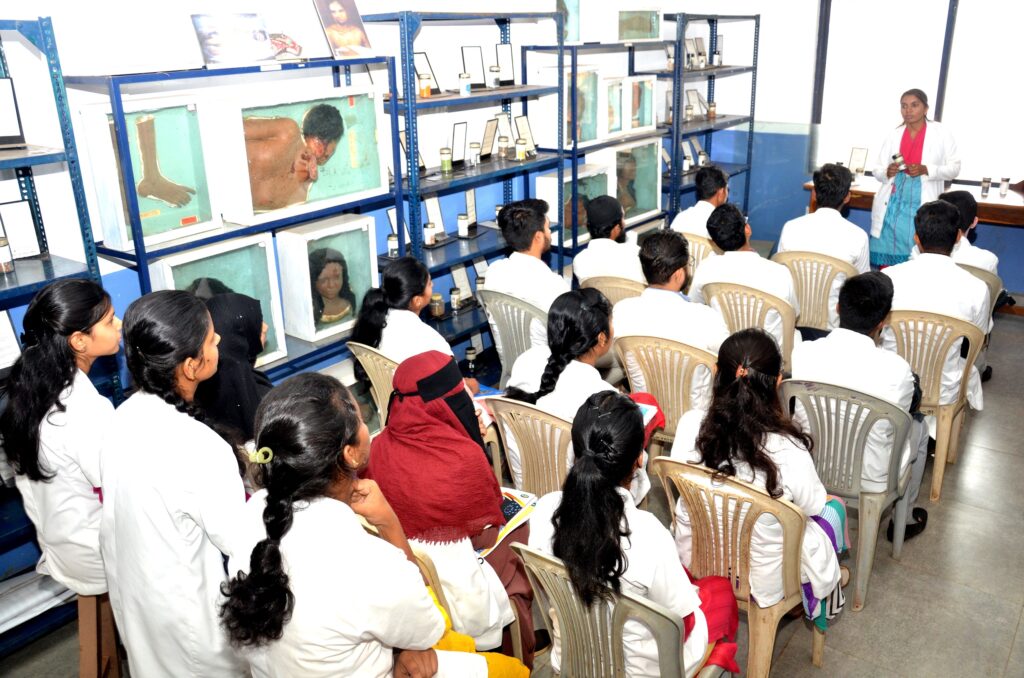
- Departmental Museum: Houses specimens, models, weapons, poisons, and forensic tools used for educational purposes.
- Demonstration Room: Equipped with teaching aids for better visualization and understanding.
- Library Resources: Availability of books and reference materials on forensic medicine, toxicology, and medical ethics.